A new radio feature by Ute Mayrhofer brings listeners into the world of arpilleras—textile pictures of resistance that speak where words often fail. The contribution, produced after Ute's participation in an Arpillera workshop, weaves together sound, testimony, and film to tell a story of loss, solidarity, and climate justice.
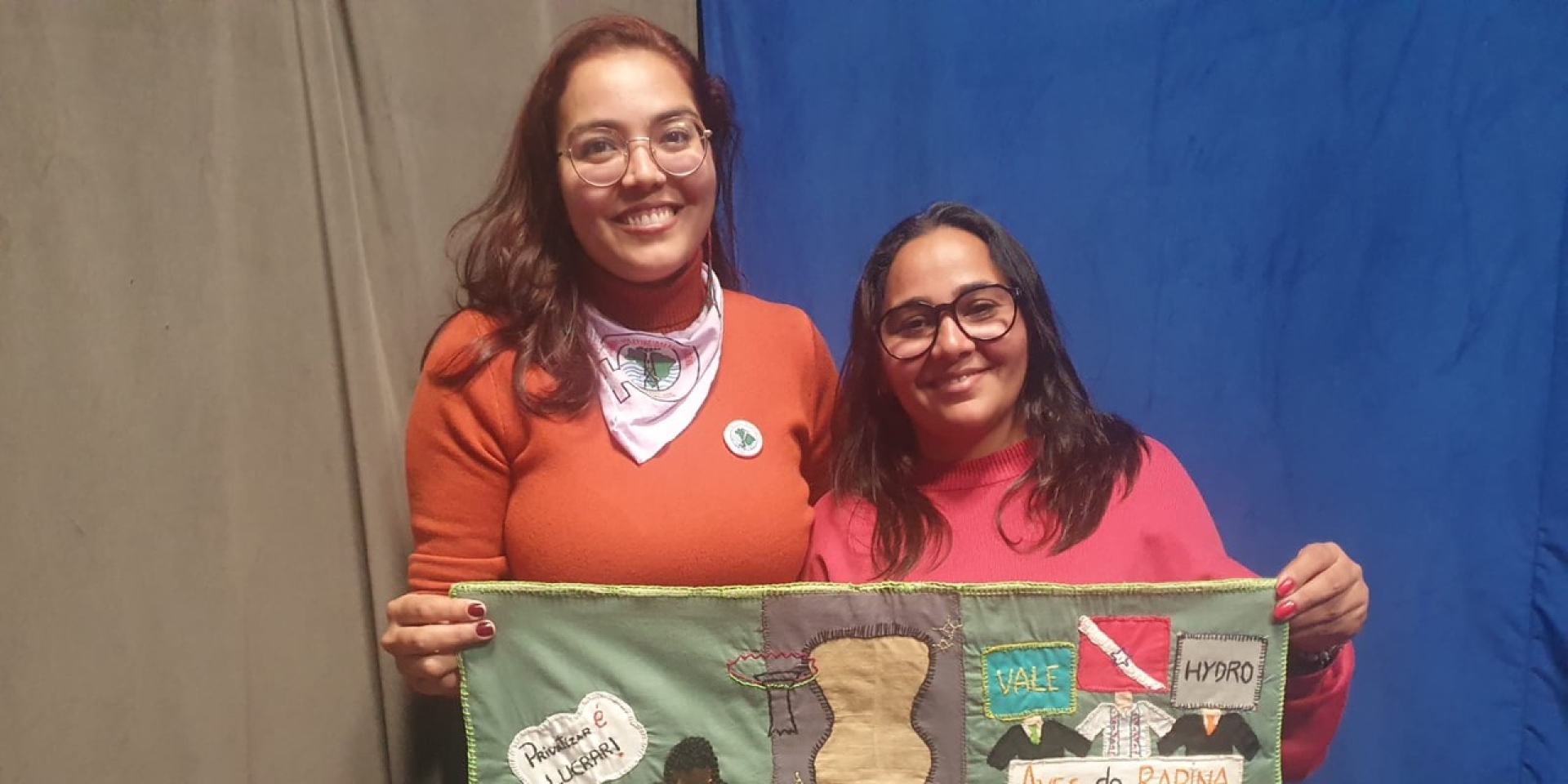
At the heart of the piece are the arpilleras themselves. Born during the Chilean dictatorship as a clandestine form of testimony by women whose voices were silenced, the practice has been carried forward by women in Brazil—many of them affected by dams, mining, and large-scale infrastructure projects that have destroyed rivers, land, and livelihoods. Stitch by stitch, the fabric records what official narratives omit: displacement, grief, resilience, and collective care.
The radio feature captures impressions from a workshop organized by the Movimento dos Atingidos por Barragens (MAB), conversations with activists, and film material from Brazil. MAB has long fought for the rights of communities whose lives are disrupted by the global energy model—linking local struggles to a broader demand for climate justice and social accountability.
This is a story about rivers and women; about art as a language; about memory as resistance. It reminds us that textiles can be archives, that embroidery can be political, and that collective making can become a form of protection and protest.
The traveling exhibition connected to this radio work is currently on view at the Welthaus Innsbruck. From late February, it will move to Vienna, where it will be shown at the Votivkirche—bringing these stitched testimonies to a wider audience.
More information on the ongoing traveling exhibition: Alerta Amazônia.
Film excerpts used with permission from an impactful MAB production available online.
An in-depth interview with MAB activists is scheduled to air on Globale Dialoge on February 17, extending the conversation across borders.
Together, the radio feature and the exhibition invite us to listen differently—to fabrics, to rivers, to women’s histories—and to recognize art not as decoration, but as a living, stitched record of resistance.