28.09.2026
Engaging Boys as Allies in Promoting Girls’ Potentials
Problem & Solution
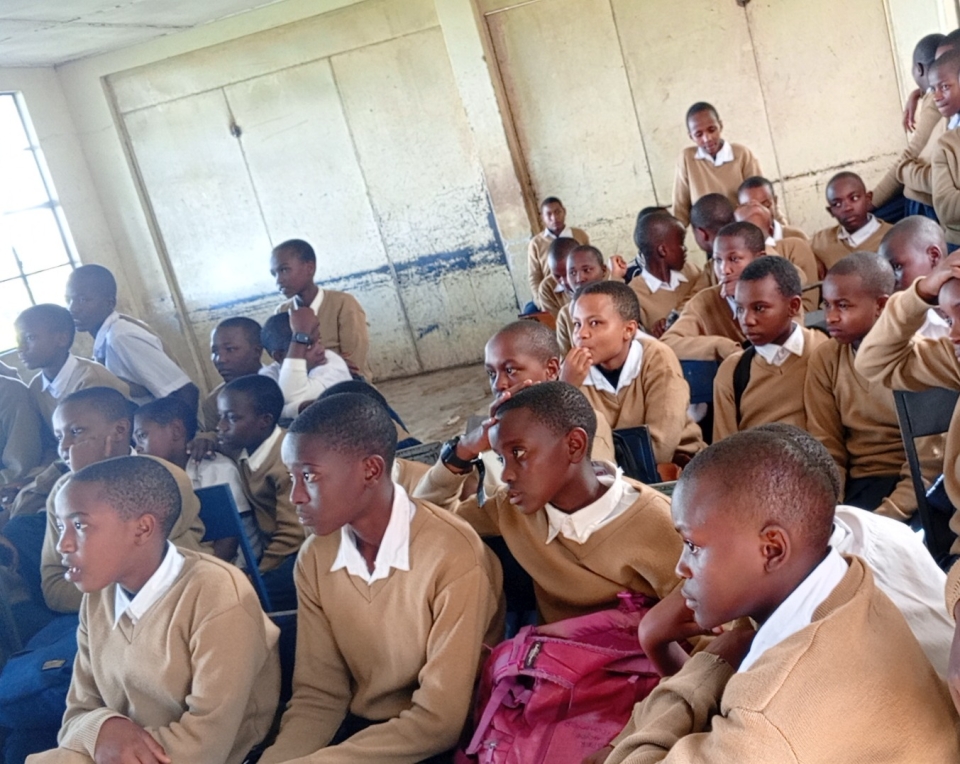
A school-based programme originally focused exclusively on equipping adolescent girls with knowledge and life skills to navigate adolescence and pursue their potential. However, boys repeatedly expressed interest in participating, revealing a broader challenge: boys had few opportunities to understand the barriers faced by girls, while stereotypes and limited discussion of puberty, relationships and gender equality reinforced unsupportive behaviour.
WEGS recognised that including boys could strengthen the environment around girls, but could also divert attention and resources from the programme’s original purpose. Following consultations with students, teachers, school management and the donor, WEGS adapted the learning package to engage boys as allies while retaining girls’ empowerment, participation and safe spaces as the central priority.
The Experience
- WEGS assessed whether boys’ inclusion could support, rather than weaken, the objective of empowering girls. Staff consulted school management, and guidance teachers to identify suitable content, align the adaptation with existing school structures and secure approval for the required changes.
- The learning package was revised to address adolescence, gender equality, respectful relationships, communication, shared responsibilities, prevention of gender-based violence, healthy lifestyles and boys’ roles in supporting girls’ education, safety and wellbeing.
- Facilitators used videos, quizzes, discussions, role plays, demonstrations and learning materials to encourage questions and reflection. Sessions included recaps and feedback checks, enabling content and facilitation to be adjusted continuously.
- Competitions connected the learning to participants’ lives. Girls developed livelihood ideas, while boys examined barriers affecting girls and proposed locally relevant solutions through essays, poems, drawings and drama.
- Teachers reinforced messages and monitored changes in participation and peer interaction. Student feedback, creative outputs, teacher observations and monitoring visits were combined to review emerging results.
Challenges
- Integrating boys without reducing girls’ voice, leadership or access to safe spaces
- Revising materials and activities that had originally been designed exclusively for girls
- Adaptions increased demands on staff time, facilitation, assessment, coordination and programme resources
Impact
- Greater awareness among boys of barriers affecting girls and their own responsibility as allies
- More respectful peer interactions and greater confidence among girls to participate, express their views and pursue their aspirations
- Stronger teacher capacity for gender-responsive facilitation and mentoring
Lessons Learned
- Listen to participants (girls and boys) and regard feedback as practical ways to improve program quality.
- Define safeguards for girls’ participation and safe spaces before involving boys as allies.
- Consult students, teachers, school leadership and funders before revising to ensure that adaptations are evidence-based, realistic, and aligned with program objectives.
- Use creative assignments to increase engagement and application of gender concepts beyond classrooms.
