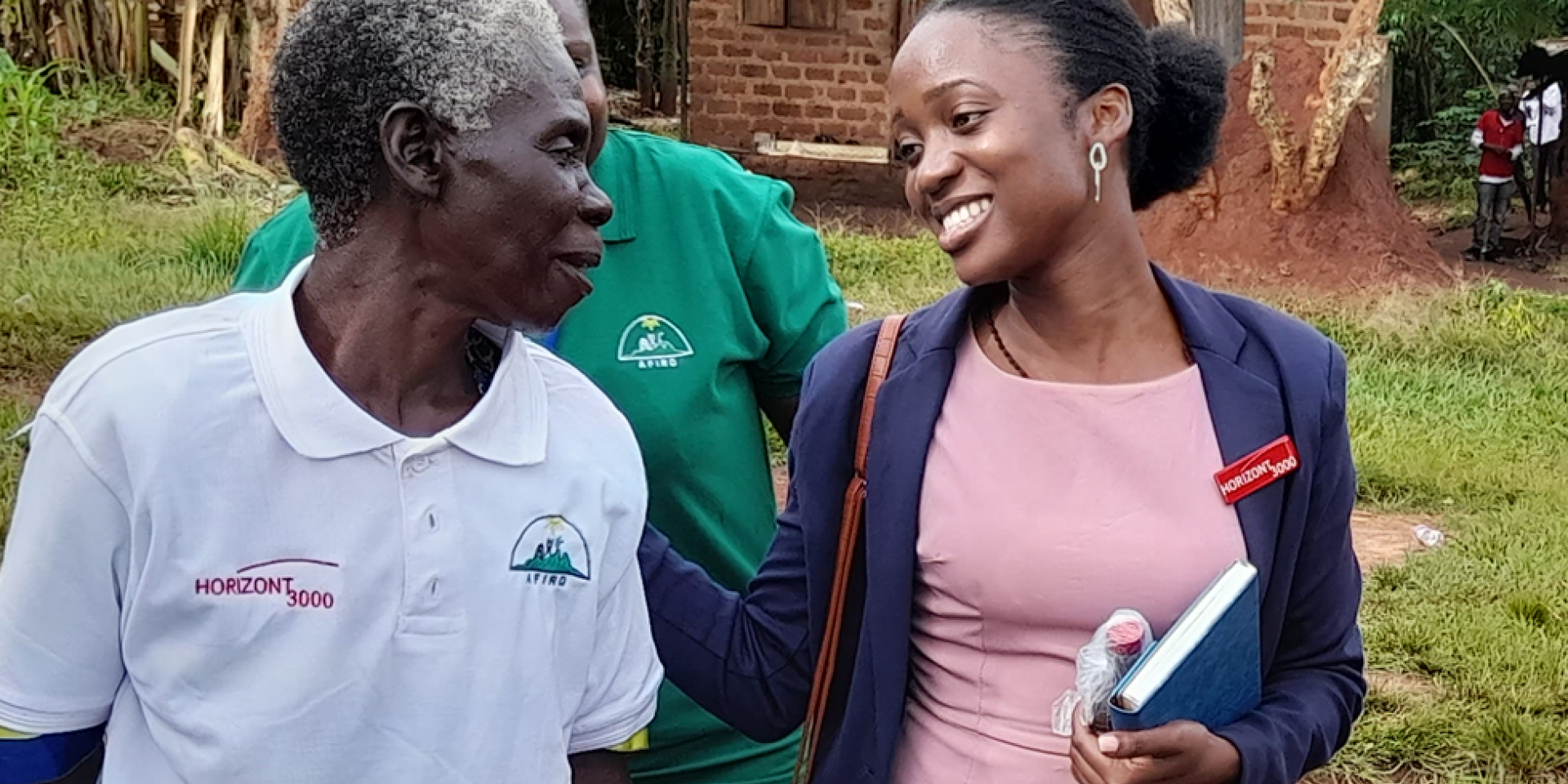
For many community organizations in Uganda, the challenge has been finding ways to keep their work going beyond donor funding. That was the reality for the Agency for Integrated Rural Development (AFIRD), a Ugandan organization working with smallholder farmers, women, and young people to improve livelihoods, food security, and sustainable farming practices.
AFIRD had long wanted to establish a social enterprise that could generate income and support its work. The vision was there, but the systems, structures, and strategy needed to make it successful were yet to take shape.
Through the horizont3000 advisory program, AFIRD received support to turn that vision into a practical and sustainable model. Working closely with the organization’s management and technical teams, the advisor helped strengthen the organization's resource mobilization efforts, business planning, and agroecological practices by empowering the team to think critically, make decisions, and take ownership of implementation.
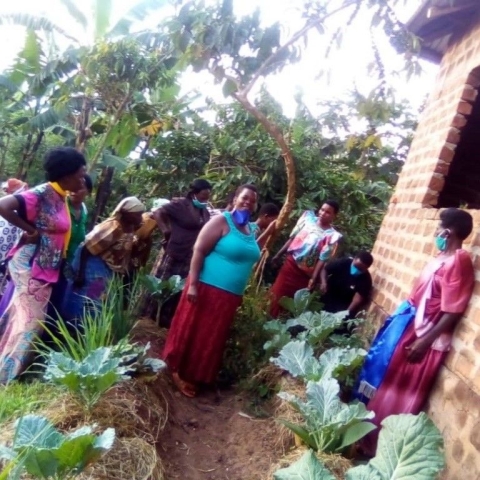
One of the biggest milestones of the advisory assignment was strengthening AFIRD's permaculture learning and resource center. Together, the team developed a business plan, identified priority products, and put systems in place to guide operations. This helped AFIRD focus on producing organic fertilizers and pesticides while expanding its training and consultancy services.
The assignment also encouraged the team to think differently about growth. Staff learned how to prioritize opportunities, manage their time more effectively, and make strategic decisions instead of trying to pursue too many ideas at once. According to the counterparts, the advisor’s support “helped them dream bigger” because they were finally able to begin selling products and seeing the potential of the enterprise.
The advisor also supported the development of training materials and operational tools, helping AFIRD offer more structured and professional learning services. Dedicated staff roles were established for the learning centre, creating greater focus and efficiency.
Beyond income generation, the assignment promoted learning and collaboration. Through networking opportunities and exposure visits, AFIRD gained new ideas, strengthened its systems, and built confidence in its approach. Improved online visibility and open days also helped raise awareness about the centre and its services.
Environmental sustainability remained at the heart of the work. The advisor encouraged responsible land management, tree planting, and the protection of green spaces. These practices were not only adopted within the organization but also shared with surrounding farming communities.
Several factors contributed to the success of the assignment, including strong induction and orientation support, continuous knowledge exchange, effective networking and partnerships, complementary institutional support, and the extension of the assignment period. Effective collaboration between the advisor and counterparts, combined with a participatory working approach, further promoted ownership and sustainability of the processes introduced.
While AFIRD acknowledges that more implementation time would have strengthened results further, the organization now has clearer systems, stronger structures, and renewed confidence in its sustainability journey.
Ultimately, the assignment demonstrated that sustainable organizational growth is about strengthening systems, nurturing local leadership, empowering organizations to think strategically for the future and funding.