Learning and sharing are central to how horizont3000 works with partner organisations across regions and programmes. Over the years, we have developed a wide range of methods to capture experiences, exchange know-how, and support organisations in applying what they learn. What was sometimes missing was a single, coherent reference that brings these elements together – from foundational concepts to hands-on formats and, finally, to practical steps for integrating Knowledge Management (KM) into everyday work.
That is why we published the Learning & Sharing Guide last year. We have now added a brand-new part to this guide and redesigned the whole thing as a clearly structured trilogy. The guides consolidate practice-based frameworks, tools, and routines that have been tested and refined within the horizont3000 network. They are designed for people who want to facilitate exchanges, document experiences, or even incorporate a KM component into their project proposals to offer added value.
Taken together, the three parts support a simple goal: making learning easier to plan, easier to document, and easier to use – so that experiences travel beyond the moment and the team in which they emerged.
Part 1 provides the conceptual foundation. It clarifies how horizont3000 (h3) understands Knowledge Management, organisational learning, and learning & sharing – and why these concepts matter for effective cooperation. It distinguishes between data, information, and knowledge; explains tacit and explicit knowledge; and introduces key learning and Knowledge Management frameworks used in our work.
Beyond definitions, Part 1 also situates learning & sharing within the broader organisational context: how learning needs are identified, how relevant experiences are selected, and how learning objectives can be shaped through organisational self-assessments. This makes Part 1 particularly useful when a team wants to align understanding across different roles and locations before choosing methods or planning activities.
Typical use cases
Part 2 is the hands-on guide to concrete h3 learning & sharing activities. It supports colleagues and partners who plan, coordinate, or facilitate these activities and need clear guidance on formats, preparation, roles, and documentation. It starts with facilitation essentials, recognising that effective learning depends on how discussions are structured, how participation is enabled, and how outcomes are captured in a way that others can use.
The guide then walks through a range of proven methods grouped across three areas:
Experience capitalisation – turning lived practice into shareable knowledge through approaches such as systematisation, structured questionnaires, and storytelling.
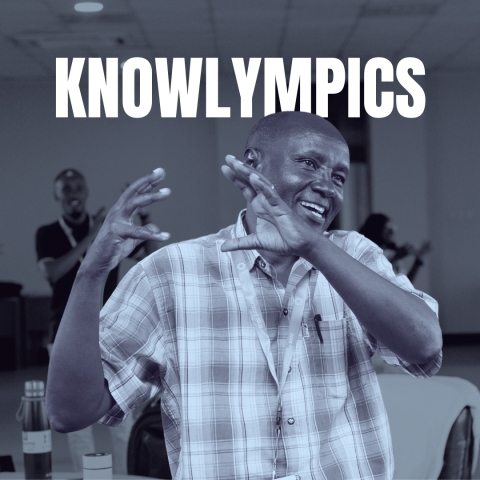
Knowledge sharing formats – including sharing events, exchange and learning visits, Knowlympics, and Communities of Practice.
Training and coaching – where structured capacity enhancement inputs are needed, including guidance on combining trainings with follow-up coaching to support application.
Typical use cases
Part 3 focuses on implementation: how small to mid-sized civil society organisations (CSOs) can establish workable systems and habits that support learning over time. The emphasis is on solutions that are realistic: light enough to be maintained, but structured enough to be reliable.
This part offers a clear, pragmatic implementation pathway, including two routes:
The guide provides practical steps to assess the current situation, identify priority knowledge needs, and decide what level of “strategy” is appropriate. It also includes guidance on translating ambitions into an action plan with responsibilities, realistic timelines, and meaningful indicators. For example, it treats measurement as a way to steer and communicate value (for example, time saved, quality improved, reuse increased), rather than counting outputs that do not change practice.
Typical use cases