Date
29.09.2026
By
Isaac Amuku, UGA

Gender-Responsive Policy Reviews: Lessons from East Africa

East Africa
Co-financing
Policy Dialogue
Human Rights & Civ. Soc.

Periodic public policy reviews prevent governments from funding obsolete or counterproductive programs.

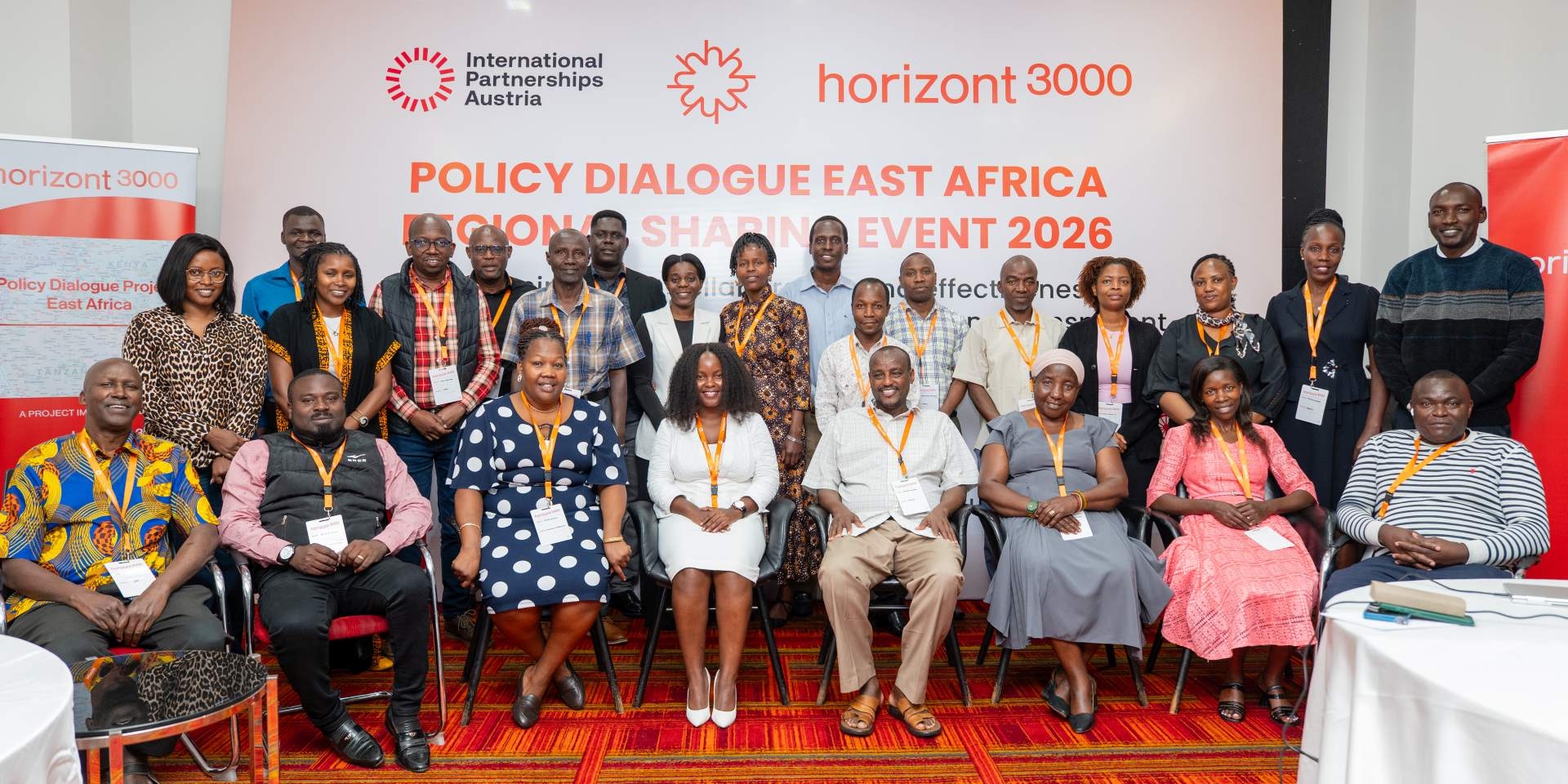
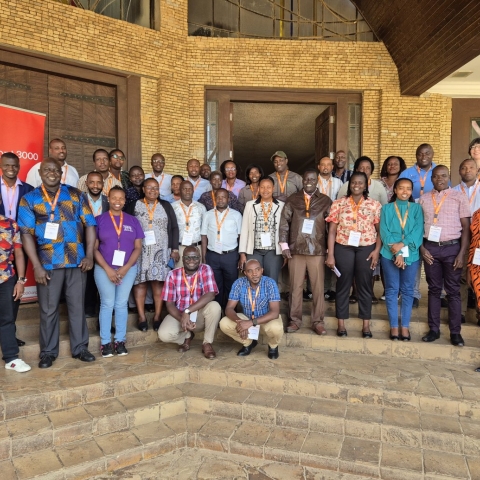
A side session panel discussion held on August 19th, 2026, during the Policy Dialogue East Africa Regional Sharing Event (RSE 2026) in Dar es Salaam, Tanzania brought together 29 regional policy leaders and civil society practitioners to answer critical questions how policy reviews can truly be transparent and gender-responsive.

On the panel, Ezekel Philipo, Senior Planning Officer from Tanzania’s Ministry of Community Development, Gender, Women and Special Groups (MoCDGWSG), Sarah Kiminda Wambui, Policy dialogue Champion from Grassroots Organizations Operating Together in Sisterhood (GROOTS) – Kenya, Valentina Clifford, Senior Programme Officer from The Land Rights Research & Resources Institute (Hakiardhi), Ibrahim Abdalla, Partnership Coordinator at Pastoralist Community Initiative Development and Assistance (PACIDA) and Catherine Mulaga Walter, the Executive Director at Mbeya, Ileje and Isangati Consortium (MIICO) shared their experiences on how public policy reviews can truly be transparent and gender-responsive. This panel discussion was moderated by Dr. Innocent Nduhura Augustino from EVI Research International Limited.

Panelists stressed that policy reviews are always done when there are gaps in the policies or need in the communities on services being provided by the government or lack of budget available for providing adequate services to the communities.

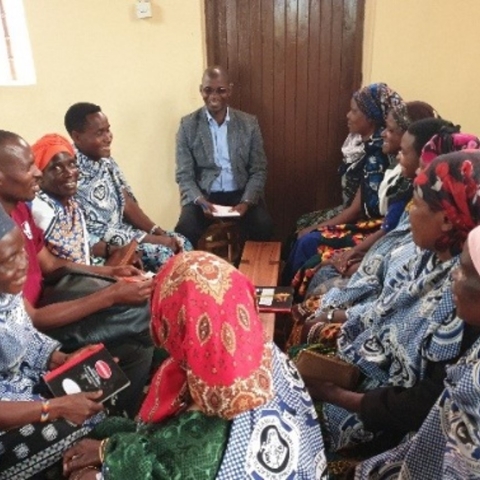
Similarly, evidence and stakeholder engagement are paramount when reviewing policies. For example, MIICO highlighted that in Mbozi district located in the Southern highlands of Tanzania, the agricultural budgets frequently favored male-dominated cash crops like coffee over food crops grown by women, such as beans and sweet potatoes but through evidence and policy dialogue engagements, the district local government leaders were propelled to increase the budget to establish tailor made field schools for women.

Effective policy reviews require strong institutional governance, as shown by Tanzania’s systematic review of its 2000 Women and Gender Development Policy, which informed the updated 2023 policy framework. In Kenya, PACIDA collaborated with the Marsabit County government and systematically reviewed and amended the 2018 Water Act and the 2019 Climate Change Adaptation Policy and the 2020 Climate Change Fund Act.

In addition, across Uganda, Kenya and Tanzania, policy review timelines are not fixed and may range from three to ten years. Because the review process is often lengthy, it requires continuous consultation, policy dialogue and verifiable evidence to ensure a smooth and successful outcome. For example, in Tanzania, Hakiardhi initiated the review of the 1995 National Land Policy in 2016. The revised policy received presidential assent in 2023 and was officially launched in 2025.
Lessons learned from reviewing policies from a gender lens

  • Policy review follows systematic and logical process. In reference to the submission, Ezekiel Philipo stressed that effective national policy reviews require structured evaluation phases: assessing past implementation, identifying emerging technological and climate gaps, addressing statistics shortages, ensuring broad multi-sector stakeholder and continuous policy dialogue engagement, and applying findings directly to the new framework.
  • Empowering communities and adapting to official calendars. In Kenya, for example; Sarah Wambui Kiminda stressed that reviewers must empower grassroot communities and align their public participation efforts directly with government budget timelines, such as the County Integrated Development Plan (CIDP) calendar.
  • Readiness and mobilization of sufficient resources before initiating any policy reviews. In both Kenya and Tanzania, Ibrahim Abdalla and Valentina Clifford stressed that CSOs must remain continuously prepared with sufficient resources such as; human, financial and independent verifiable research databases to achieve meaningful results when reviewing public policies.

Challenges

  • Policies and committees often lack meaningful female representation. For example, historically women are often excluded from policy review committees leaving women without a formal voice leading to resolutions that favored men rather than securing justice for female survivors of violence.
  • Existence of gender-blind policy frameworks. For example, in Kenya, the 2019 Climate Change Adaptation Policy as well as the 2020 Climate Change Fund Act omitted critical gendered impacts of environmental and climate change crises such as; increased exposure to sexual and gender-based violence (SGBV) and reproductive health risks when women travel long distances for water and firewood during droughts.
  • High cost associated with gender responsive policy reviews. All panelist stressed that gender responsive policy review takes a long period of time stretching for even more than 10 years, since deep-rooted customary norms and practices require long period of continuous advocacy to dismantle them. This is partly the reasons why duty bearers are often reluctant to initiate review processes unless civil society organizations (CSOs) step in to fund them and engage in awareness raising and advocacy.
  • Lack of reliable and up to date gendered disaggregated data and evidence. This has made it hard to evaluate how existing policies affect men and women differently.

Recommendations

  • Ensuring mandatory gender quotas during all the stages of policy reviews. For example, explicit gender quotas (such as the one-third rule) in technical working groups, and oversight committees for effective representation and equal voice. This should be coupled with establishment of formal gender desk and referral mechanisms that respond to all the emerging gender induced communities’ concerns.
  • Aligning priorities during policy reviews to ensure that resources and services prioritize women and girls because they bear double burden. First of all, historically they excluded from policy discussions and secondly less services and budget allocated for needs and interests witnessed from MIICO’s budget analysis studies and PACIDA’s policy review findings.
  • Generating verifiable evidence that demonstrates policy gaps and justify gender-responsive revisions. CSOs must collect verifiable data and maintain own database at all times with gendered disaggregated data to instigate systematic and timely response to gender responsive policy reviews.
  • Policy dialogue institutionalization. Institutionalization of policy dialogue approach allows long term CSOs corporation and effective participation in not only policy reviews but all the 4 phase of the policy cycles that include; agenda setting, policy formation, policy implementation and policy reviews. As a result of this, coalition built in the different technical groups and empowerment of duty bearers and rightsholders will guarantee multi-years reviews and policy dialogue engagement at all levels.

Your choice regarding cookies

This website required cookies in order to function. Technically required cookies stored locally do not collect any personal data. Further technically required cookies are stored by the providers of third party applications.
Additionally, non-essential cookies are collected for analytical purpuses.

You can find out more by visiting our cookie policy linked below.