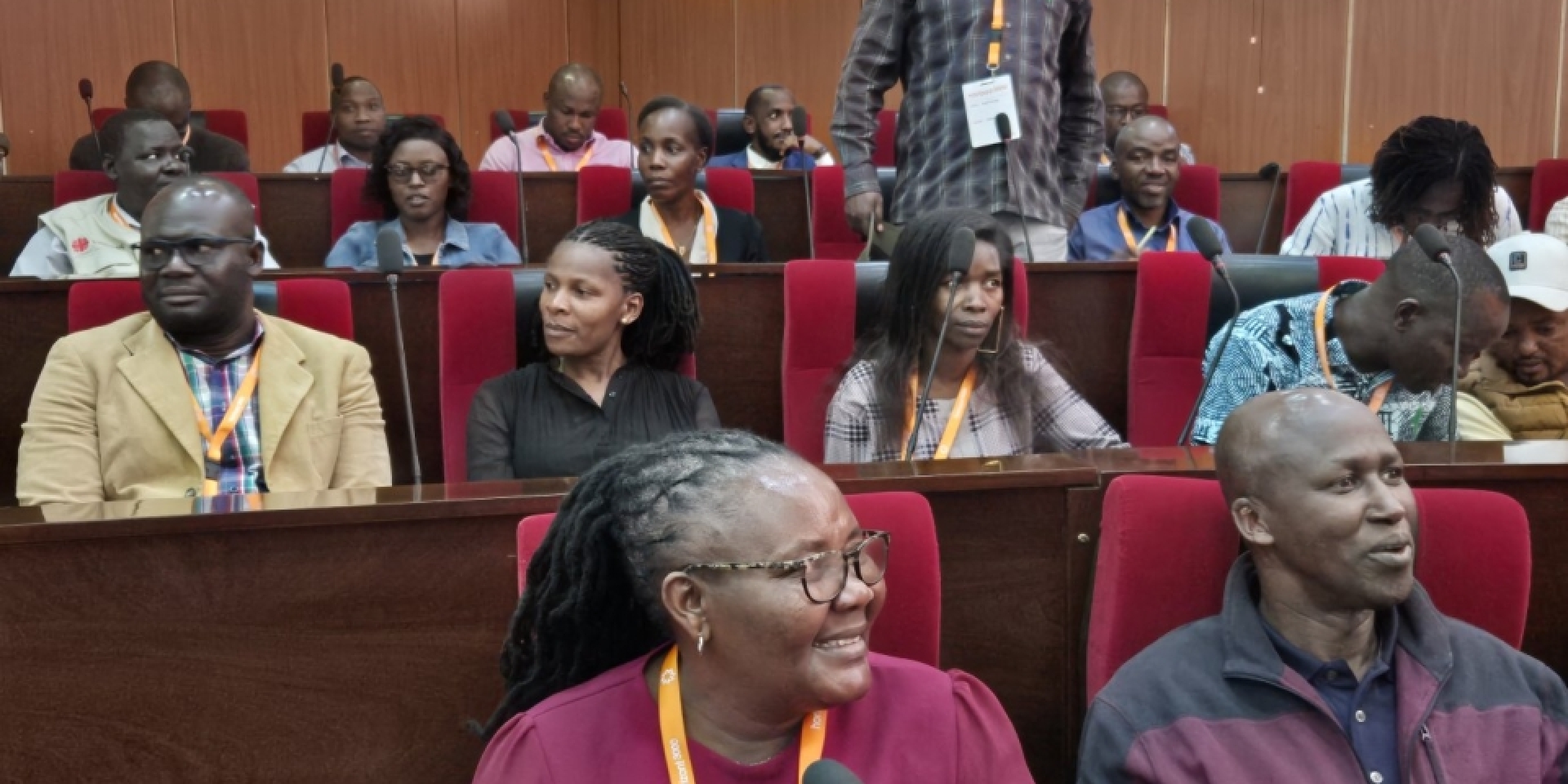
A decade ago, it would have been unusual for a grassroots woman in Kiambu to walk into a county planning meeting, interrogate a budget line, question a proposed policy, and follow up with officials on what had been agreed. Today, women are doing exactly that.
This change did not happen through a single training, meeting, or public participation forum. Since 2014, GROOTS Kenya’s Policy Dialogue initiative in Kiambu and Nyandarua has invested in a much longer process of building grassroots women’s capacity to understand how policy decisions are made, organize around shared priorities, engage decision-makers, and sustain relationships with government over time. Through this work, women have engaged in policy conversations ranging from dairy and potato value chains to county budgeting, climate action, gender-based violence, and energy. Their voices have contributed to discussions around processes such as Kiambu’s 2021 Climate Change Bill and the County Energy Plan.
Over time, one lesson has become particularly clear: policy influence takes time. Women need to understand where decisions are made and how those processes work. They need access to information and evidence that can strengthen the issues they bring forward. They need the confidence to speak, but also the ability to organize around common concerns so that they are not engaging only as individuals. Just as importantly, they need to keep showing up after a public participation meeting has ended, following up on commitments and sustaining relationships with the people and institutions responsible for acting on them.
Between 2023 and 2025, this gradual shift from participation towards influence became increasingly visible. In 2023, 95 grassroots champions participated in public forums, 38 engaged directly with county actors, and 20 had emerged as recognized community leaders. By 2024, the engagement had become more focused. Thirty-eight women participated in county planning processes, while 10 engaged directly in budget and legislative review. During the same year, 200 grassroots women came together in Kiambu to publicly demand justice and stronger responses for survivors of gender-based violence. Their participation was becoming more organized and purposeful, with women increasingly using public spaces not simply to attend meetings but to articulate collective concerns and push for action. By 2025, this engagement was also reaching beyond county-level spaces. Around 500 women had been reached through GBV sensitization, 60 women engaged with the National GBV and Femicide Technical Working Group, and another 15 participated in county and national Gender Technical Working Groups. Issues that women were confronting in their villages and communities were increasingly finding their way into wider county and national policy conversations. The numbers show the scale of that growth. Phase IV reached 699 grassroots champions against an initial target of 200, while recorded policy engagement increased from 232 instances in 2023 to 725 in 2025. More than 2,500 people were also reached indirectly. Yet the most important change cannot be understood through numbers alone. It can be seen in the way women themselves now engage with policy processes and with those who hold public authority.
Women who once entered meetings primarily to listen are increasingly arriving having already discussed the issues within their groups and communities. Rather than raising isolated concerns, they are able to bring forward collective priorities. They are asking questions about budgets, policies, plans, and implementation, and they are becoming more deliberate about following up after meetings. In some cases, the relationship with government has shifted further: instead of women always looking for officials in order to raise an issue, some grassroots leaders have become people whom government actors themselves reach out to because they are recognized as voices within their communities. This change reflects one of the most important lessons from the Policy Dialogue initiative. Meaningful policy influence cannot be built through a single meeting or a single public participation process. It develops through repeated engagement, trusted relationships between communities and decision-makers, an understanding of how policies, plans and budgets work, and evidence that connects policy discussions to people’s everyday realities. It also depends on organized women who are prepared to return to the same issue, ask what happened after commitments were made, and continue engaging when implementation falls short.
When grassroots champions reflected at the end of Phase IV, this longer-term process was one of the clearest lessons from their experience. A project can create the opportunity for women to enter policy spaces, but the deeper value lies in whether women leave those projects with the relationships, knowledge, organization, and confidence to continue engaging after the funding period has ended.
That is becoming an important part of the legacy of the Policy Dialogue work. Policy Dialogue is now embedded within GROOTS Kenya’s 2023–2027 Strategic Plan, while learning from the experience is continuing through the East Africa Policy Dialogue Community of Practice. As the work develops, the question is also changing. It is no longer sufficient to ask whether grassroots women participated in a policy process. The more important question is what changed because they participated. For grassroots women in Kiambu and Nyandarua, policy dialogue is therefore becoming less of an activity attached to a particular project and more of an approach to organizing and engaging with public institutions. Women have built networks among themselves, developed relationships with decision-makers, strengthened their understanding of policy spaces, and gained experience in taking community priorities from the village into county and national discussions. These are capacities that do not disappear when a project closes.
The project may have ended, but the women continue to organize, maintain the relationships they have built, raise issues affecting their communities, and engage the institutions responsible for responding to them. In that sense, perhaps the strongest outcome of the Policy Dialogue initiative is not simply the number of women who participated in meetings or the number of policy engagements recorded. It is that grassroots women increasingly see policy engagement as something they can do for themselves, collectively and continuously, beyond the life of any one project.